
Product Discovery
Customers should be able to find products on your Shopify store quickly and easily. But as your catalogue grows, navigation, filtering and search can become harder to manage, making it more difficult for customers to find what they need.
If customers can't find relevant products, they may leave without purchasing, even when you have exactly what they're looking for.
Improving product discovery is about creating a smoother shopping experience that helps customers find and buy the right products.
What is product discovery and why is it important?
Customers can't buy products they can't find. Making product discovery easier is an important part of improving the shopping experience.
Product discovery covers how customers find and explore products through navigation, collections, filters and search. When these aren't working effectively, customers can struggle to find relevant products, particularly on stores with larger catalogues.
Unclear categories, irrelevant filters or having to browse multiple pages can add unnecessary steps to the shopping journey. As part of our Conversion & UX Optimisation work, we review how customers navigate Shopify stores and identify opportunities to make finding products and completing purchases more straightforward.
Is your Shopify navigation helping customers find what they want?
Good navigation should help customers understand where to go next, without making them think too hard about how your products are organised.
If categories are unclear, menus are overcrowded or products are grouped in unexpected ways, customers can struggle to find what they need.
For larger catalogues, a well structured mega menu can help by grouping related categories and providing clear routes to popular products. However, too many links can become overwhelming without a clear hierarchy.
When reviewing navigation, we consider product categorisation, menu labels and how easily customers can reach relevant collections. Sometimes small changes to menu structure and wording can make a significant difference without requiring a redesign.
A real world example: Stringberry
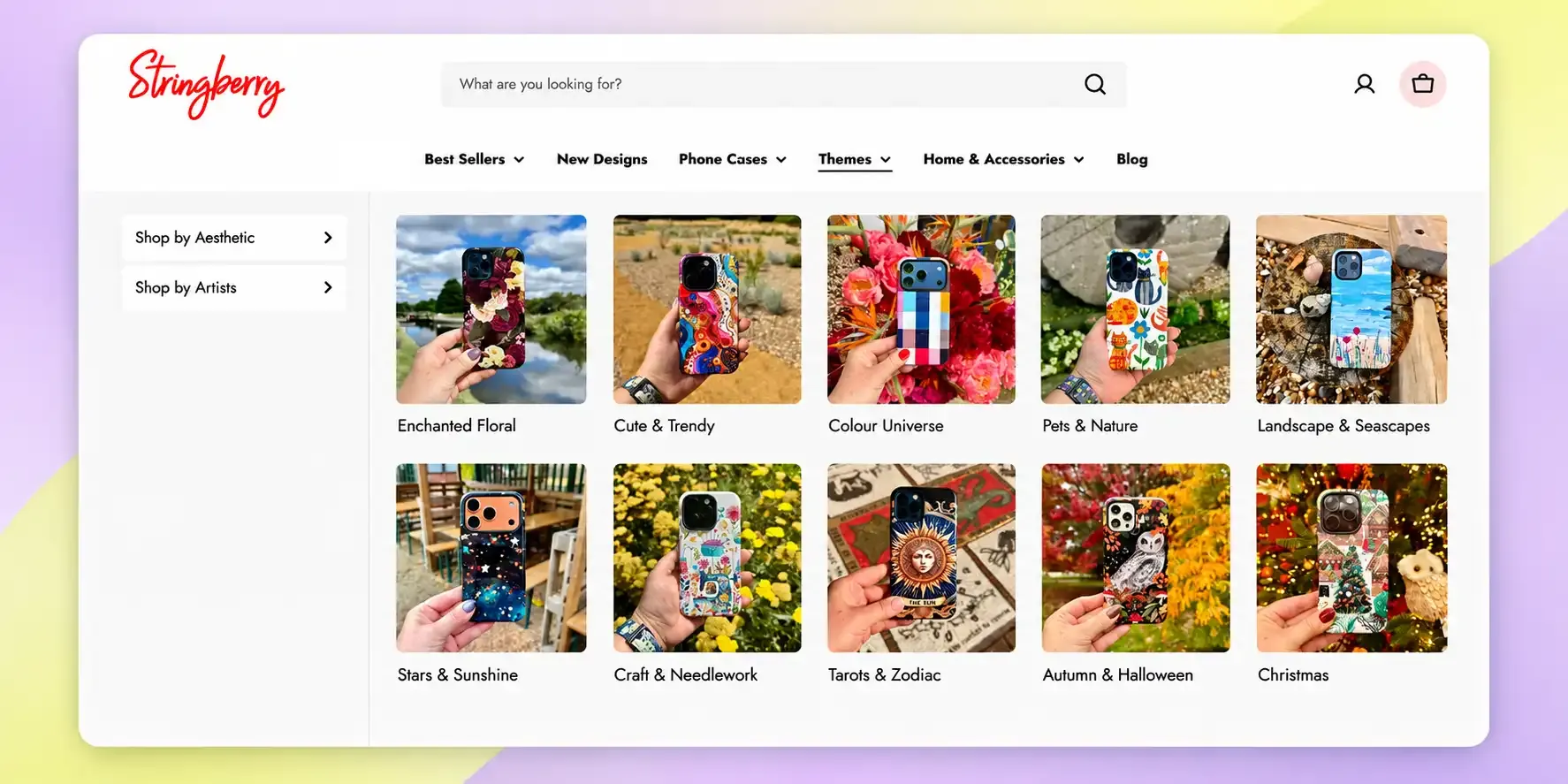
When working with Stringberry, we helped simplify navigation across a catalogue of thousands of designs and hundreds of phone models. The existing navigation was overwhelming, making it difficult for customers to explore beyond the pages they initially landed on.
We restructured the navigation around devices, artists and design styles, reducing the number of top level links from 17 to just 6. Alongside improved collection filtering and more relevant product imagery, this helped create a simpler shopping experience.
Following launch, Stringberry recorded a 23% increase in overall conversion rate, reflecting the benefits of the wider storefront improvements.
Are your Shopify collection pages making product discovery easier?
Collection pages should help customers narrow down their choices, not make them work harder to find the right product.
Poorly organised filters, unclear sorting options and inconsistent product information can make collection pages frustrating to use.
For example, clothing customers may want to filter by size, colour or fit, while those buying tools might need to narrow products by application, material or specification. Filters should reflect how customers shop rather than simply displaying every available attribute.
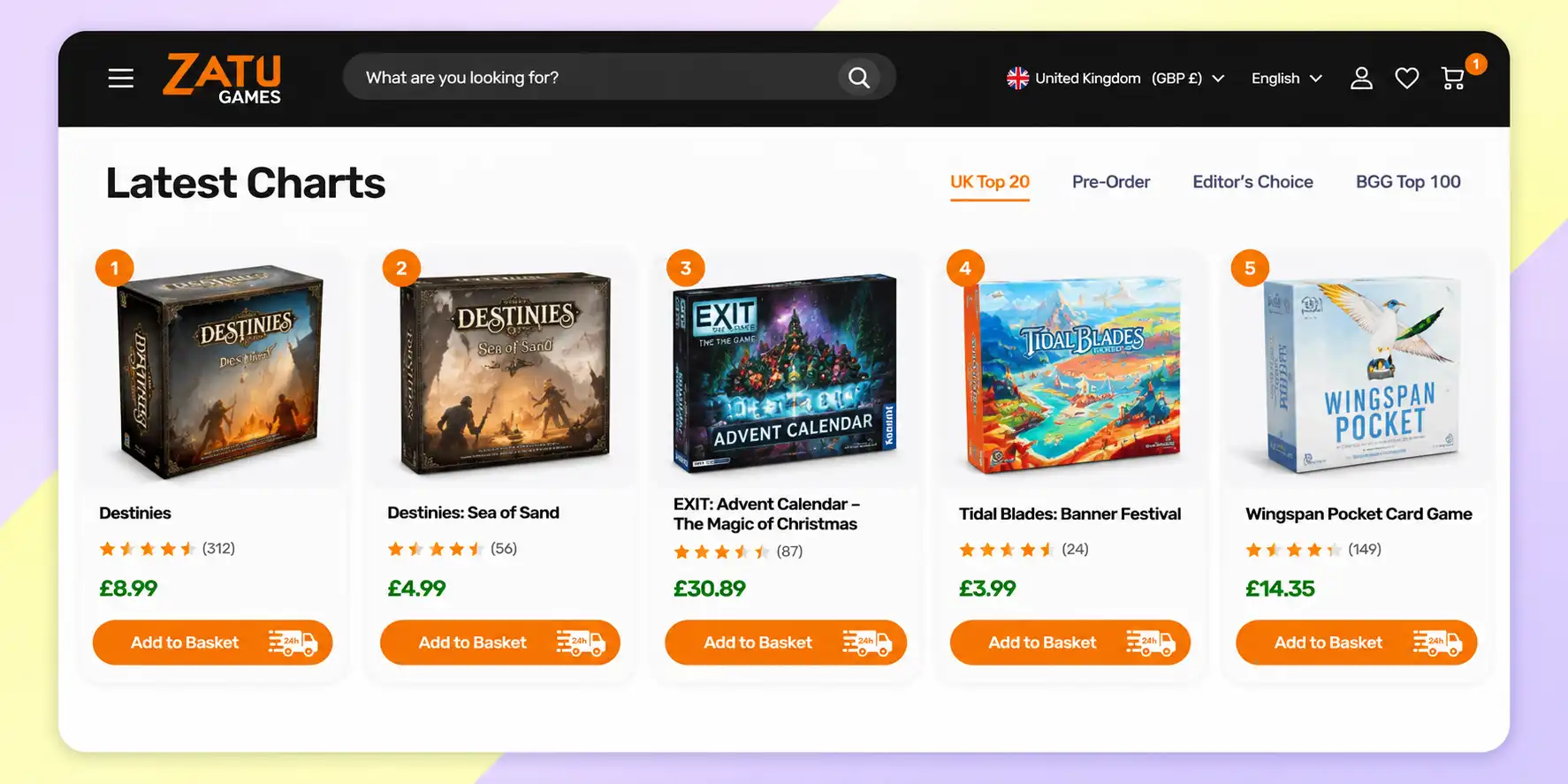
Product cards should also provide the information customers need to compare products, which will vary depending on what's being sold. For clothing, this might include available colours or sizes, while board games may benefit from details such as player count, recommended age or award badges, as seen on Zatu Games.
When assessing collection pages, we review filtering, sorting and product presentation to identify improvements that make browsing easier and reduce unnecessary steps.
A real world example: Zatu Games
When working with Zatu Games, we helped improve product discovery across a large catalogue of board games. As part of its move to Shopify, we restructured navigation, collections and filtering, making previously difficult-to-find products accessible in a single click.
We also made key purchasing information easier to find, including stock availability and delivery options, helping customers compare products and make more informed decisions.
Read the full Zatu Games case study
Is your Shopify search functionality working effectively?
Customers using search often know what they're looking for. Your store should make it easy for them to find it.
Some customers arrive looking for a specific product, brand or requirement and head straight to the search bar. If results are irrelevant, spelling mistakes aren't recognised or familiar terms return no results, customers may assume the products aren't available.
Predictive search, product suggestions and relevant filters can help, while reviewing customer search terms can reveal differences between how customers describe products and how they're categorised.
How do you identify what's making products difficult to find?
The best product discovery improvements start with understanding how customers actually navigate your store.
Before changing navigation or introducing new functionality, it's important to understand where customers are struggling. Analytics, search data, heatmaps and customer behaviour can help identify potential problems.
For example, customers repeatedly changing filters without finding suitable products may suggest the options aren't relevant. Similarly, frequent searches with little engagement could indicate poor search results.
Through our Conversion & UX Optimisation service, we review these journeys and recommend targeted improvements to navigation, filtering, search and product presentation.
The goal isn't to add more features, but to help customers find the right products with less effort.
Not sure whether customers are finding what they need on your Shopify store? Get in touch with our team to discuss opportunities for improvement.