
SEO Migration
If you're considering moving from WooCommerce to Shopify, you might be concerned about losing the organic search visibility you've spent years building. Changing ecommerce platforms does introduce SEO risks, but a well-planned migration should protect your existing rankings and create opportunities for growth.
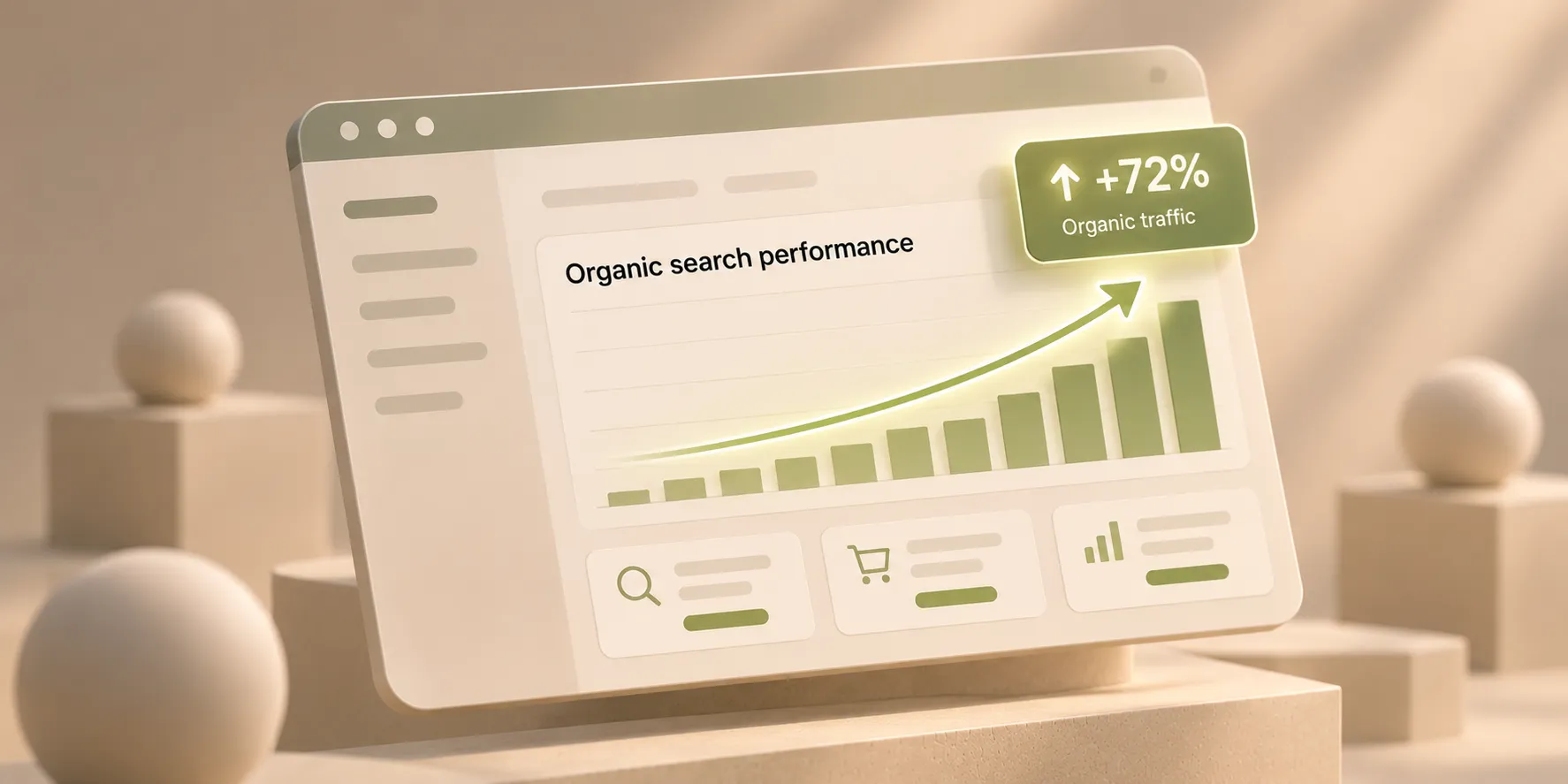
We've seen this first-hand with Zatu Games, where a WooCommerce to Shopify migration contributed to a 77% increase in organic sessions.
What happens to your SEO when moving to Shopify?
The important thing is to treat SEO as part of the migration process, not something to address after your new Shopify store goes live.
Moving from WooCommerce to Shopify changes more than the technology behind your store. It can also change how search engines discover, understand and rank your content. Some of the biggest considerations include:
- URL structure: Shopify uses a different URL structure to WooCommerce, so existing product and category URLs will need redirecting.
- Content and metadata: Product descriptions, page titles, meta descriptions and other SEO content need to be preserved or carefully improved.
- Site architecture: Changes to navigation, collections and internal linking can affect how search engines discover and prioritise your pages.
- Technical SEO: Canonical tags, structured data, XML sitemaps and indexing rules all need reviewing as part of the migration.
None of these changes automatically mean losing rankings. However, overlooking them can cause valuable pages to disappear from search results or lose the authority they've established over time.

How do you protect your SEO when migrating to Shopify?
Protecting your organic visibility starts long before your new Shopify store goes live. Before migrating, it's important to understand which pages are already performing well, where your organic traffic comes from and which search terms are driving valuable customers to your store.A successful SEO migration should include:
- An SEO audit: Identify your highest-performing pages, existing rankings and any technical issues worth addressing.
- A redirect strategy: Map existing WooCommerce URLs to their most relevant Shopify equivalents using permanent 301 redirects.
- Content preservation: Retain valuable product descriptions, category content and metadata rather than unnecessarily rewriting everything.
- Technical SEO checks: Review internal links, canonical tags, structured data and indexing before launch.
- Post-launch monitoring: Track organic traffic, rankings and indexing issues to identify anything that needs attention.
If you already work with a specialist SEO agency, we'd recommend involving them from the beginning of your migration. They'll understand your existing search performance and can help protect the visibility you've built.
If you don't have an SEO partner, we can bring in trusted specialists such as Leftfield to work alongside our Shopify development team.
This collaborative approach means we're not simply moving your store to a new platform. We're considering how the migration can protect your existing organic traffic and create opportunities for future growth.
What we learned from migrating Zatu Games from WooCommerce to Shopify
When we migrated Zatu Games from WooCommerce to Shopify Plus, we weren't dealing with a small ecommerce store. The project involved more than 80,000 SKUs and an established business with significant organic search visibility to protect.
Working alongside Marco Felicio at Leftfield, we involved specialist SEO expertise throughout the migration to manage risks and monitor performance after launch. By comparing equivalent trading periods, removing known anomalies and focusing on daily median sessions, we were able to establish a more reliable picture of performance.
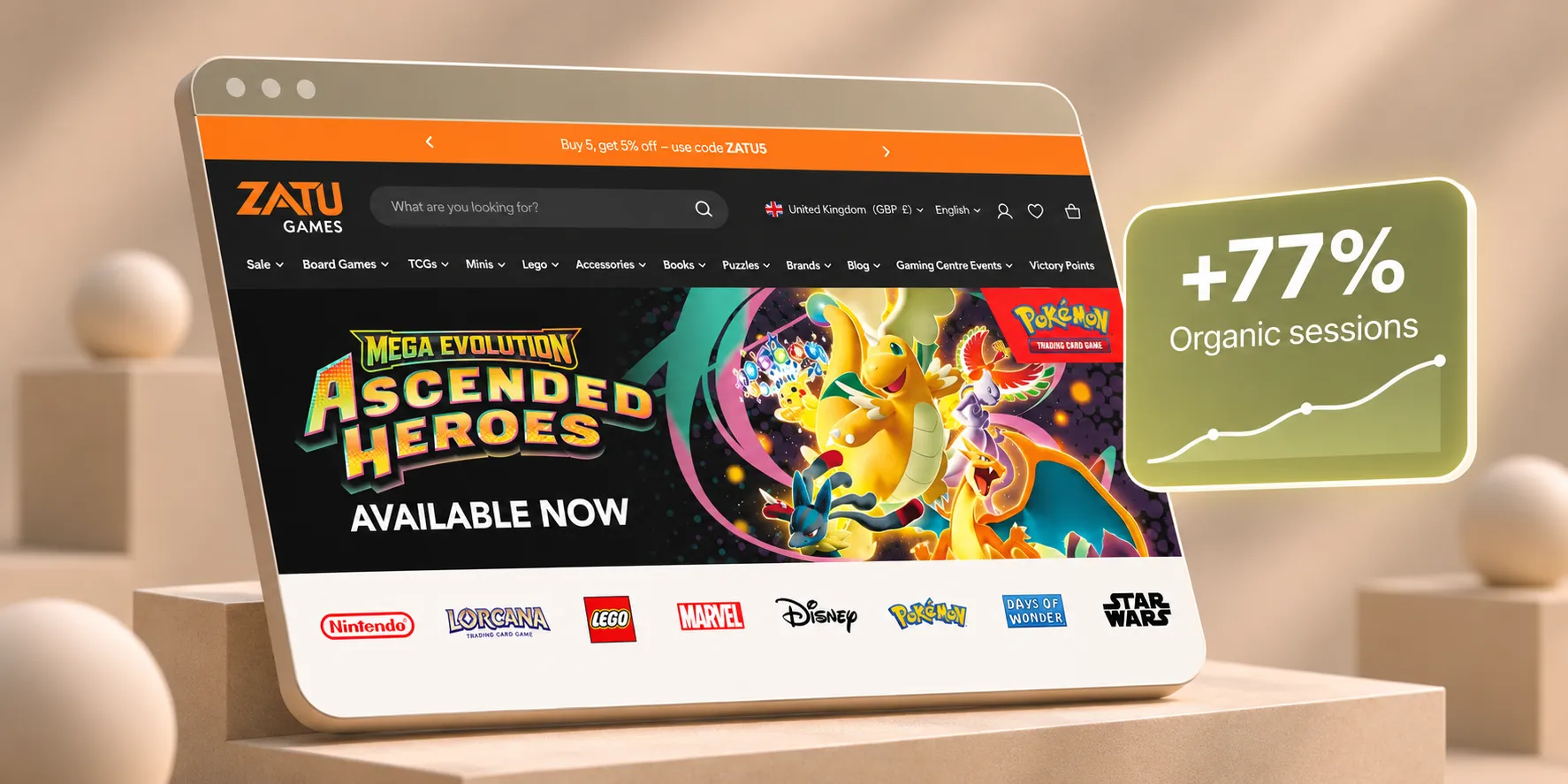
The result was a 77% increase in organic sessions against the pre-migration baseline.
It's an important reminder that post-migration SEO performance isn't always straightforward to interpret. Rankings and traffic can fluctuate, and the quality of your reporting matters just as much as the numbers themselves.
Read the full Zatu Games migration case study.
Moving to Shopify shouldn't mean starting again with SEO
If your WooCommerce store already attracts valuable organic traffic, protecting that visibility should be a priority from the outset of your migration.
If your WooCommerce store already attracts valuable organic traffic, protecting that visibility should be a priority from the outset of your migration.
But that doesn't mean your ambition should be limited to maintaining existing rankings. Moving to Shopify is also an opportunity to address technical issues, improve site structure and build a stronger foundation for future organic growth.
At Inspira, we work alongside your existing SEO specialists or bring in trusted partners to make sure search visibility is considered throughout the migration process.
If you're considering a move, explore our WooCommerce to Shopify migration services to see how we can help you make the transition with confidence.


Frequently asked questions
Should I involve an SEO agency when migrating to Shopify?
We strongly recommend involving SEO specialists, particularly if your business relies heavily on organic traffic. They can establish performance benchmarks, help plan redirects, review technical SEO and monitor results after launch. At Inspira, we're happy to collaborate with your existing SEO agency or introduce trusted specialist partners such as Leftfield.
Do I need to redirect every WooCommerce URL to Shopify?
Every valuable, indexable WooCommerce URL should be accounted for during migration. Where URLs change, permanent 301 redirects should point visitors and search engines to the most relevant Shopify equivalents. Avoid redirecting everything to your homepage, as this can damage the user experience and make it harder to preserve existing search visibility.
How long does SEO take to recover after a Shopify migration?
There's no fixed recovery period. Google needs time to crawl your new website, process redirects and understand changes to your site structure. Some stores stabilise within a few weeks, while larger or more complex migrations can take several months. Monitoring performance after launch is essential.
Will I lose my Google rankings if I migrate from WooCommerce to Shopify?
A well-planned migration should aim to preserve your existing search visibility by maintaining valuable content, implementing appropriate redirects and ensuring search engines can discover your new Shopify pages. However, some ranking fluctuations are normal, and there are no guarantees that every page will retain its previous position.